
Every memorable recording is more than a clean capture of instruments and voices.
It is a conversation between musicians and the surrounding space, with the room acting as an additional, invisible instrument. The way sound moves, reflects, and fades in that space has a direct impact on how we experience the music.
Acoustics decide whether notes feel close or distant, warm or sharp, intimate or monumental. Many of the recordings we call “legendary” owe their emotional impact not only to playing and writing but also to the character of the rooms where they were made.
Let’s try to understand this magic in today’s article.
How room acoustics define a recording
As soon as a musician plays a note, the sound starts interacting with the environment. Surfaces like walls, floors, and ceilings bounce the sound back, creating early reflections, reverberation, and subtle tonal shifts. Together, these elements shape the sense of depth, presence, and clarity that listeners hear.
In a very dry room with heavy damping, sound dies quickly. This kind of space favors precision, tight timing, and close-mic recording, making it easy to edit and layer parts later. A more resonant room behaves differently: tones bloom, sustain, and blend, adding size and emotion that can be difficult to reproduce with plug-ins alone. Musicians often adjust their playing in response, changing dynamics, articulation, and phrasing to suit the room.
Microphone technique sits at the heart of this relationship. Engineers choose how much room sound to capture and how much to focus on the direct signal. A memorable recording finds a balance between the two: enough detail to follow each line and enough space to feel the music living in a real environment.
Key acoustic factors that shape sound
Several acoustic properties influence the perception. Knowing them helps explain why some rooms become favorites for particular styles or instruments.
- Reverberation time: How long it takes for sound to fade away. Shorter reverb supports clarity and articulation; longer reverb adds scale, drama, and emotional resonance.
- Early reflections: The first echoes that reach the ear after the direct sound. Their timing and level affect how intimate, distant, or “forward” a source feels.
- Room frequency balance: Certain spaces emphasize lows, mids, or highs. This can add warmth and body or, if poorly controlled, create muddiness or harshness.
- Diffusion: How evenly sound scatters through the room. A well-diffused space avoids harsh echoes and dead zones, offering a stable listening and recording environment.
- Noise floor: Ambient noise from outside or from equipment. Low noise is essential for preserving detail and dynamic contrast, especially in acoustic, jazz, and classical sessions.
These aspects are not just technical details for engineers. They directly influence musical choices: the touch of a pianist, how close a vocalist stands to the mic, or which cymbals a drummer selects. In practice, the room behaves like another member of the ensemble.
Examples of legendary acoustics in action
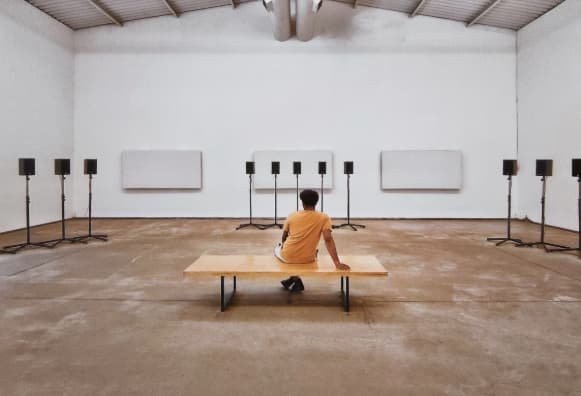
Many classic albums carry the unmistakable fingerprint of the rooms they were recorded in. When people call a record “warm,” “open,” or “intimate,” they are often reacting to acoustics as much as to arrangement or performance.
Large concert halls, for example, shape orchestral and choral recordings through their long, smooth reverberation. Strings and voices merge into a unified orchestral sound rather than a collection of individual parts.
Traditional recording studios known for jazz or acoustic music offer a different kind of space: controlled but musical. In these rooms, drum kits sound three-dimensional, pianos have both attack and resonance, and brass instruments gain a natural halo without losing definition.
Vocals provide another example. A singer working in a sympathetic room can explore subtle dynamics, knowing that the quietest details will be captured. Instead of relying only on synthetic reverb, the engineer may position the microphone to pick up both the direct voice and the room’s gentle reflections. The result is a vocal sound that feels grounded in a real space, drawing the listener closer.
In a Word
Acoustics sit at the core of how recordings feel, not just how they measure on paper. Legendary sessions happen when performance, room, and technology are all pulling in the same direction.
For musicians, understanding the impact of space can guide decisions about where to record and how to play. For engineers, listening to the room before placing any microphones allows them to shape the sound by working with its strengths rather than fighting its weaknesses.
Even in compact project studios, thoughtful treatment, diffusion, and mic placement can move recordings closer to the depth and character associated with classic rooms.